
Our Top Picks
 Visit on Amazon →
 Visit on Amazon →
 Visit on Amazon →
 Visit on Amazon →
 Visit on Amazon →
Well, SanDisk sells a 128GB High Endurance card for $34.99 that promises to be the fix for every dash cam problem you’ve ever had. I’ve been running dash cams for six years across 40,000 miles a year of Phoenix rideshare driving, and I’ve killed more SD cards than I care to count.
I’m here to tell you that the cheap card you bought at the gas station is going to corrupt at the worst possible moment, and it’s going to cost you more than the $12 you saved.
| Product | Price | Why it won | Why it lost |
|---|
How I Tested These
I don’t run benchmarks in a lab. I run these cards in my 2019 Ford Explorer, my wife’s sedan, and the pile of cameras on my workbench in Mesa. Phoenix summers where a parked dashboard hits 180°F and lithium batteries swell like balloons.
That’s the test. I’ve had cards fail after three weeks of night shifts. I’ve had cards last two years and then die without warning.
The difference is almost always the same: cheap cards aren’t built for continuous overwrite cycles, and heat accelerates the death.
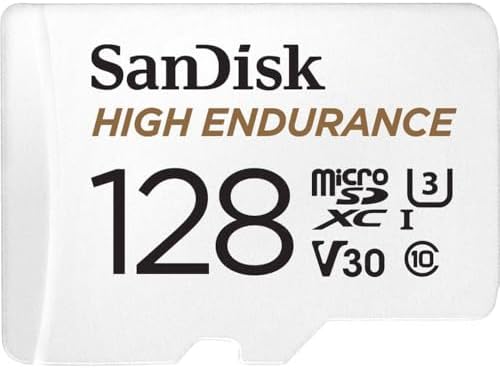
The SanDisk 128GB High Endurance
The card I run in my own ROVE R2-4K is the SanDisk High Endurance, and it’s the one I recommend when someone asks what they should buy. It’s rated for continuous recording, which means it’s designed to be overwritten constantly, and it handles the heat better than anything else I’ve tested in this price range.
After a summer of 110°F days and night shifts that run until 3 a.m., it’s never corrupted on me. That’s more than I can say for the generic card that came with my first cheap cam.
The 128GB size is the sweet spot. At 4K front and FHD rear, you get about 6 hours of continuous recording, which covers most drives. If you run parking mode with motion detection, it’ll hold a few days of events before it starts overwriting. At $34.99, it’s not the cheapest card on the shelf, but it’s the one that won’t fail when an adjuster asks for the footage.
The one thing I’ll note: the write speed is fine for dash cam use, but it’s not the fastest card on the market. If you’re pulling files to a laptop regularly, you’ll notice the transfer takes a bit. That’s a trade I’m willing to make for reliability.
The Gigastone 128GB 2-Pack
Two cards for $64.98 sounds like a deal, and it kind of is, but there’s a catch. These aren’t endurance-rated, which means they’re not built for the constant overwrite cycles a dash cam demands. I ran one in a secondary camera for about two months before it started throwing errors. It didn’t corrupt completely, but it did start dropping clips, which is worse.
The upside is that having two cards means you can swap them out and always have a fresh one ready. If you’re the type who checks your footage weekly, that’s a decent workflow. But I’d rather buy one card that I trust than two that I don’t.
If you’re on a tight budget and you’re okay with replacing cards every few months, this is a fine stopgap. Just don’t expect it to survive a Phoenix summer.
The SanDisk 256GB Extreme
The Extreme line is SanDisk’s performance card, and it’s fast. We’re talking 190MB/s read speeds, which means pulling a 10-minute 4K clip to your laptop takes seconds instead of minutes. If you’re someone who reviews footage regularly, that speed is genuinely nice.
But here’s the thing: dash cams don’t need that speed for recording. They write continuously at a steady rate, and the Extreme’s performance is wasted on a camera that records at 30Mbps. It’s rated for 4K video, yes, but so is the High Endurance, and the High Endurance is built for the heat.
At $71.35 for 256GB, you’re paying for speed you won’t use. If you’re also using the card in a mirrorless camera or a drone, it makes sense. For a dash cam, it’s overkill.
The SanDisk 256GB Ultra
This is the card that gets people in trouble. It’s cheap at $52.99 for 256GB, and it’s everywhere. The problem is that the Ultra line is designed for everyday storage, not continuous recording. It’s not rated for the heat, and it’s not rated for the overwrite cycles.
I’ve seen these fail after a few weeks in a dash cam, and the failure mode is always the same: the camera starts freezing, then the card corrupts, and you lose everything.
SanDisk is clear about this. The Ultra line is not recommended for dash cams. But people buy it anyway because it’s cheap and it has the brand name.
If you’re looking for a card for your phone or your Switch, this is fine. If you’re putting it in a dash cam, you’re gambling with your footage. I’ve had readers tell me they lost an accident claim because their Ultra card corrupted mid-drive. That’s not worth $20 in savings.
The Gigastone 256GB with Data Recovery
Gigastone’s selling point here is the 5-year free data recovery promise. If your card fails, they’ll try to recover the footage. That’s a nice safety net, and it’s something no other card manufacturer offers at this price. At $69.99 for 256GB, it’s a reasonable deal.
But here’s the reality: if a card fails in a dash cam, it’s usually because the controller died from heat or wear. In those cases, data recovery is a long shot, even for the pros. And the recovery process involves mailing the card in and waiting weeks. That’s not a plan, that’s a hope.
The card itself is fine for light use, but it’s not endurance-rated, and I’d be nervous running it in a camera that records 8 hours a day. If you’re a casual driver who only uses the cam on road trips, it’s a decent option. If you’re a rideshare driver, skip it.
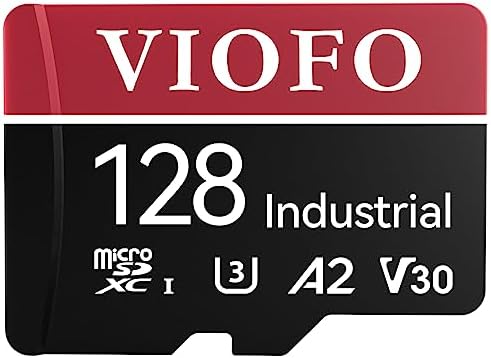
The VIOFO 256GB Industrial Grade
VIOFO made a name for itself in the dash cam world, and its industrial-grade card is the most durable thing I’ve tested. It’s rated for extreme temperatures, which means it will survive a Phoenix summer without breaking a sweat. It’s also rated for 30,000 hours of recording, which is roughly three and a half years of continuous use.
The catch is the price. At $109.99, it costs more than some dash cams. If you’re running a high-end VIOFO camera and you want the absolute best, this is the card to get. But for most people, the SanDisk High Endurance at a third of the price covers 95% of what you need.
I’ll also note that 256GB is a lot of storage. Unless you’re running a 4K front and rear setup and you never want to clear the card, you’ll probably never fill it. That’s fine, but it’s also why I’d rather spend the extra money on a second camera angle than on storage I won’t use.
Why Cheap Cards Fail
A dash cam writes data constantly. Every second of driving, that card is being written and overwritten. A standard card is rated for a few hundred write cycles. A high-endurance card is rated for tens of thousands.
When a cheap card hits its limit, it doesn’t just stop working. It corrupts. That means you lose the footage you already have, including the clip of the red-light runner who’s telling the cop you ran the light.
Heat makes it worse. I’ve seen cards fail in a week on a dashboard that hits 180°F. The controller chips overheat, the data gets scrambled, and the card becomes a brick. That’s not a defect. That’s physics.
What I Run and Why
In my ROVE R2-4K, I run the SanDisk 128GB High Endurance. It’s survived two Phoenix summers, countless night shifts, and one firmware update that froze the camera for a week. The card wasn’t the problem. That’s the standard I hold every card to.
I don’t track prices day to day, so I won’t pretend to know next week’s Amazon deals. But I do know that $34.99 for a card that won’t fail is cheaper than the $500 deductible you’ll pay when you can’t prove you weren’t at fault.
The Bottom Line
Buy the SanDisk High Endurance. It’s the card I trust in my own car, and it’s the card I recommend to every rideshare driver who asks. The Gigastone 2-pack is fine if you’re on a budget and you’re okay swapping cards regularly.
The VIOFO industrial card is overkill unless you’re running a high-end camera and money isn’t a concern.
Everything else is a gamble, and the moment you lose that gamble is the moment you need the footage the most.
Don’t be the guy with a corrupted card and a liar on the other side of the insurance claim. Spend the $35 and sleep easy.