I bought my first dash cam the week after a red-light runner told a Phoenix cop that I ran the light. I didn't. There was no footage, so it came down to his word against mine, and that claim turned into a three-month fight that raised my premium anyway. The second time someone hit me, a distracted driver at 45 mph on the 101, I had a cheap camera on the glass. That claim settled in nine days. Nothing about the second crash was better except the evidence.
That is the entire case for a dash cam. It is an insurance witness, not a gadget. The app, the voice control, the little screen on the back: decoration. So this dual dash cam comparison sticks to four things you can actually buy right now. Two front-and-rear cameras, one single-channel camera that has been the default answer for years, and the cheap piece of film that decides whether any of them stays stuck to your windshield in July.
The best pick for most people here is the ROVE R2-4K Dual, because it covers front and rear with a STARVIS 2 sensor and includes a 128GB card, which is the part everyone forgets to budget for. The 70mai A810 Lite is the one to buy if you want remote access and the longest parking mode feature list. The VIOFO A119 V3 is the honest single-channel choice if you only care what happens in front of you. The Thinp electrostatic film is a few dollars of insurance against the mount failure that quietly takes a camera out of service without ever breaking it.
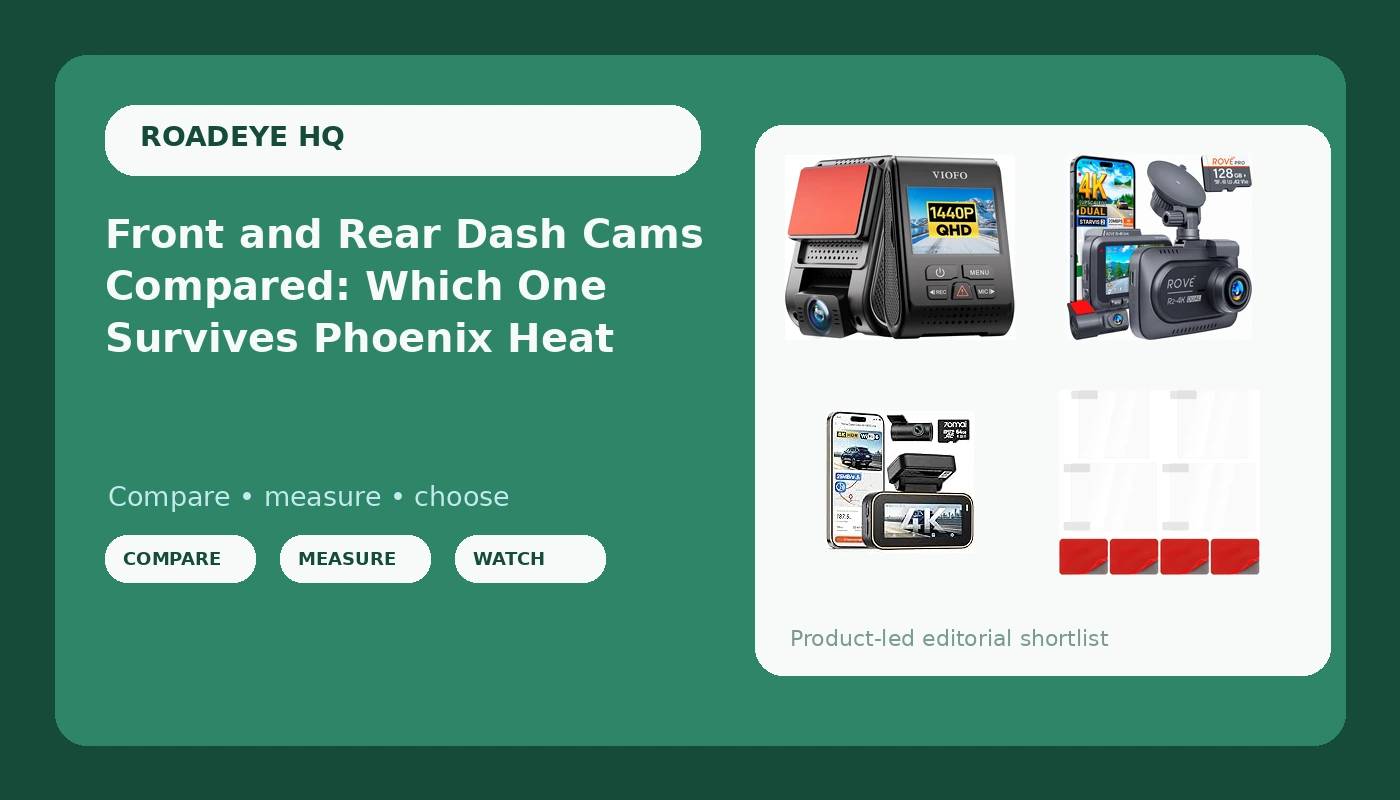
ROVE R2-4K Dual Dash Cam Front and Rear, STARVIS 2 Sensor, Free 128GB Card
Front and rear coverage with a STARVIS 2 sensor aimed squarely at low light, and the 128GB card is in the box
No cloud or remote access, and the included card still needs an endurance check before you trust it
70mai A810 Lite 4K Dash Cam Front and Rear, 5GHz Wi-Fi 6 DashCam, Car Camera 4G LTE Remote Access, GPS Tracking, HDR Night Vision, 24H Parking Mode, Voice Control, Emergency Lock
The longest feature list in this comparison: 4K front and rear, 5GHz Wi-Fi 6, 4G LTE remote access, GPS, HDR night vision, 24H parking mode, voice control, emergency lock
Every one of those features is something to configure, and parking mode plus LTE both depend on wiring and a data plan, not the camera alone
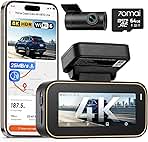
VIOFO A119 V3 Dash Cam, 2K Front Recording, GPS, True HDR Car Dashcam
A proven single-channel format: 2K front recording, GPS, True HDR, and nothing you have to babysit
No rear coverage at all, and no parking mode or remote access features to lean on

Thinp 4 Pcs Electrostatic Film for Dash Cam, Double Sided Dash Cam Sticky Pads Clear Sticker Shield for Windshields Heat-Resistant Electrostatic Stickers for Dashcam, with Adhesion Promoter
Four clear films plus an adhesion promoter for a windshield that bakes in the sun
It is a consumable, not a camera, and it will not save a mount that was installed dirty or crooked
Prices and availability were captured from Amazon Creators API and may change.
What I check before I trust a camera
Four questions decide everything for me, and none of them are on the box.
First, what does the night footage look like at 40 mph? Not in a parking lot, not at a stoplight. A moving clip where a plate is either readable or it isn't.
Second, can it survive a week on a dashboard that hits 180°F while parked? Phoenix kills more cameras than crashes do, and it kills them silently. The camera still powers on, still beeps, still shows a red light. It just stops writing good files.
Third, what does parking mode actually cost in battery drain on a real car, and who is doing the wiring?
Fourth, would I hand this clip to an insurance adjuster without apologizing for it? If the answer is no, the spec sheet doesn't matter.
Night footage is the only footage that matters
Accidents don't happen at noon in perfect light. They happen at 9 p.m. on a six-lane road with headlights coming at you, and that is the clip that decides your claim.
This is where the ROVE R2-4K Dual makes its argument. A STARVIS 2 sensor is built for low light, and pairing it with a front-and-rear setup means the car that hits you from behind is on camera too. Rear coverage matters more than people think. Both of my collisions involved someone else's front bumper meeting my rear one.
The 70mai A810 Lite takes a different route: 4K front and rear plus HDR night vision. More resolution is useful, but resolution is not the same thing as clarity. A 4K sticker on a small sensor with a low bitrate looks worse at night than a good 2K camera with a healthy bitrate. Nobody checks bitrate. Everybody should.
The VIOFO A119 V3 takes the third route: 2K front recording with True HDR. It doesn't try to win a numbers war. It just has to produce a readable plate in front of you, and that is the job.
Heat is what kills dash cams, not crashes
A parked car in an Arizona summer is an oven, and the dashboard is the heating element. I have pulled swollen batteries out of cameras that were marketed for hot climates, and I keep every melted suction cup as a reminder.
The power source is the spec that matters and the one nobody lists. Lithium batteries and heat do not get along. They swell, they fail, and they take the camera with them. Capacitor-based cameras are the only kind I trust sitting on a dashboard through August, because a capacitor doesn't care about 150°F.
Then there is the mount. A suction cup that holds fine at 70°F lets go at 110°F, usually at 2 a.m., usually onto your dash, sometimes with the camera still recording the underside of your glovebox. That is the failure the Thinp electrostatic film is built for: four clear films that go between the mount and the glass, plus an adhesion promoter so the whole assembly stays where you put it instead of sliding down the windshield. It is the least exciting thing in this comparison and possibly the most important.
Parking mode: read the fine print
The 70mai A810 Lite advertises 24H parking mode, and that is a genuinely useful feature. It is also the feature most likely to disappoint you, for reasons that have nothing to do with the camera.
Parking mode needs power while the ignition is off. Plugged into a cigarette lighter, it dies the moment you turn the key. To get 24 hours of monitoring you have to hardwire the camera to the fuse box, and once you do, you are borrowing from your car battery. That is the trade: coverage while parked, in exchange for a battery drain you should actually measure before you trust it.
If you are not going to wire it properly, buy the camera for the driving footage and treat parking mode as a bonus. If you are going to wire it, do it once, do it with a fuse tap, and check your battery voltage after a week.
The SD card is half the system
The card is the cheapest part of the setup and the one that fails first. Loop recording writes and rewrites constantly, and heat makes it worse. A normal card corrupts at exactly the moment you need the clip, and you will not know until you pull the card and find a folder of nothing.
This is the quiet advantage of the ROVE R2-4K Dual: a 128GB card is included, so you are not guessing at capacity on day one. Capacity is not the whole story, though. What you want is a high endurance card rated for constant recording and high temperatures. Verify that rating on the card itself, not in the listing photo.
Whatever you buy, format the card in the camera, not on your laptop, and check it monthly. A camera that silently stopped looping is worse than no camera, because you think you are covered.
Connectivity, apps, and the account problem
The 70mai A810 Lite brings 5GHz Wi-Fi 6, 4G LTE remote access, GPS tracking, and voice control. If you want to check on your car from your phone, or pull a clip without touching the camera, that is the camera in this group that does it.
My warning is about accounts. Any feature that requires you to sign in before you can download your own footage is a feature that can be turned off, rate limited, or priced later. Read what the LTE connection actually requires before you buy it for that reason. The clip on the card is yours forever. The clip in someone else's cloud is yours as long as the service exists.
The VIOFO A119 V3 is the counterargument to all of it: GPS and HDR, no cloud, no subscription, no account. Some drivers want that simplicity and there is nothing wrong with it.
Who should buy which
Buy the ROVE R2-4K Dual if you want front and rear coverage, strong low-light hardware, and a card in the box so you can install it and forget it. This is the one I would hand to a rideshare driver who is tired of thinking about cameras.
Buy the 70mai A810 Lite if you want the feature ceiling: 4K both directions, remote access, parking mode, voice control. Just go in knowing that the feature list is also a to-do list.
Buy the VIOFO A119 V3 if you want one camera, pointed forward, doing the basic job well with GPS and True HDR, and you don't want an app in your life.
Buy the Thinp electrostatic film with whichever camera you choose. It is not optional in a hot climate. It is the difference between a mount that stays and a mount that lets go in the middle of a 115°F afternoon.
Trade-offs I would flag before checkout
The ROVE R2-4K Dual has no remote access. If you want to see your car from your phone, it is not the one.
The 70mai A810 Lite asks more of you: hardwiring for parking mode, a data plan for LTE, and setup time for voice control and emergency lock.
The VIOFO A119 V3 leaves your rear window uncovered. In a rear-end collision, that is the whole ballgame.
The Thinp film is a wear item. You will use it, you may use it wrong, and you will eventually buy more.
The bottom line
Nothing in this comparison replaces the two things that actually win claims: a clean night clip and a timestamp. Every camera here can produce the first. The rest is about whether it survives your climate and whether you did the install properly.
Pick the ROVE R2-4K Dual Dash Cam for the best balance of coverage, night hardware, and included storage. Pick the 70mai A810 Lite if remote access and parking mode are the reason you are buying. Pick the VIOFO A119 V3 if you want one proven camera and no complications. And put a Thinp electrostatic film under the mount before you stick anything to that glass.