
I've been running dash cams in Phoenix for six years, and I've watched the premium brands charge $400 for what a $150 camera does better. VIOFO and Thinkware are the two names that come up most when drivers ask me if the big spend is worth it. So I ran both through the same summer: 130°F dashboards, night shifts on the I-10, and the kind of parking lot heat that swells lithium batteries.
The VIOFO A119 V3 is the best single-channel dash cam under $100 I've tested, because it nails night footage and heat tolerance at a price that leaves Thinkware's budget options in the dust. The Thinkware F70 PRO is simpler to use, but you pay double for a screen that's harder to read.

THINKWARE F70 PRO Dash Cam 1080p Full HD, Wi-Fi, Night Vision, G-Sensor | 32GB...
Clean design, simple menu, solid build quality
1080p only, worse night detail, no screen at all, double the price
Prices and availability were captured from Amazon Creators API and may change.
VIOFO A119 V3
Pros:
- 2560x1440P Quad HD captures plates at night that 1080p cameras miss
- Capacitor-based, no lithium battery to swell in a 180°F parked car
- Starvis sensor with WDR keeps night clips readable, not black with headlight blooms
- At $69.99, it's the cheapest camera I'd trust with an insurance claim
Cons:
- Single channel only, no rear camera option
- Parking mode requires a hardwire kit, sold separately
- The menu system is deep, you'll spend 20 minutes setting it up
Thinkware F70
Pros:
- Dead simple to install and use, almost zero learning curve
- Solid build quality, feels like a $200 unit in your hand
- Capacitor power, no heat-swelling battery
Cons:
- 1080p front only, no 2K or 4K option
- No screen, you have to use the app or pull the SD card to check anything
- At roughly $150, it costs double the VIOFO for less resolution
Compared to
The honest comparison is VIOFO A119 V3 versus the Thinkware F70, because that's the budget face-off most drivers actually face. The VIOFO gets noticeably sharper in low light, thanks to the Starvis sensor and 2K resolution.
I ran both cameras on the same night route, same windshield, same time of night. At 40 mph, the VIOFO read a license plate on a dark sedan at about 60 feet.
The Thinkware F70 captured the same plate as a blurry rectangle, readable only if you paused at the exact right frame and squinted.
The Thinkware wins on simplicity. The F70 has a single button and a tiny LED indicator, and that's it. My wife could install it without asking me. The VIOFO has a 2-inch screen and a menu that buries the WDR setting three levels deep. I've owned both, and I'll take the VIOFO's footage over the Thinkware's ease of use every time, because the footage is the entire point.
If you want to spend Thinkware money, the F70 is not the unit to buy. You're better off with the VIOFO at $69.99 and a $25 hardwire kit, or stepping up to a dual channel like the REDTIGER F7NP at around $160 that gets you 4K front and 2K rear. The Thinkware F70 sits in an awkward middle: too expensive for what it delivers, and too limited for drivers who actually need night footage.
Design
The VIOFO A119 V3 is a wedge shape, about 3.5 inches long and 1.5 inches tall. It mounts with either a sticky pad or a suction cup, and both are included in the box, which is rare at this price. The 2-inch screen is bright enough in daylight, and it swivels so you can angle it toward the driver side if you want to check it without craning your neck.
The Thinkware F70 is a cylinder, about 2.5 inches long, with a sticky mount only. No suction cup, no screen. You set it up with the phone app, which works, but it's one more step. The lack of a screen means you can't verify the angle or the recording status at a glance.
I've had drivers tell me they trusted the F70's little LED light, then discovered a week later the SD card had failed and they had no footage.
With the VIOFO, the screen shows REC and a timestamp, so you know it's working.
Performance
Night footage is the entire product, and this is where the VIOFO separates itself. The Starvis sensor with WDR keeps the image usable in the worst conditions: oncoming headlights, unlit residential streets, highway glare.
I pulled a clip from a night shift on the 101 where a car cut me off and brake-checked me. The VIOFO caught the driver's face in the mirror, the plate, and the timestamp, all in one frame.
That's the clip that would end an insurance argument in 10 minutes.
The Thinkware F70's 1080p sensor is fine in daylight. In the dark, it's acceptable, but only just. On the same unlit street, the F70's footage looked grainy, and the WDR washed out the plate on a car parked under a streetlight. It's not bad footage, it's just not claim-winning footage. For a $150 camera, I expect better.
Daytime is a wash. Both cameras produce clear, color-accurate video. The VIOFO's 2K resolution gives you a bit more room to zoom in on a detail, like a storefront sign or a pedestrian's face, but honestly, both are fine in the sun.
Durability
This is the Phoenix test, and both cameras passed, but the VIOFO did it with better margins. I left the VIOFO on my dashboard for a full week in August, when the parked car interior hit 185°F. The capacitor design means there's no lithium battery to swell.
It recorded every drive, never shut down from heat, and the sticky mount held firm. The Thinkware F70 also uses a capacitor, and it survived the same week without issue.
The build quality on the Thinkware is excellent, the plastic feels denser, the lens housing is tighter.
But it costs more than double what the VIOFO does, and it has no screen and lower resolution. The durability is the Thinkware's best feature, and it's still not enough to justify the price.
One thing I noticed: the VIOFO's suction cup mount is the weak point. In extreme heat, the rubber can soften and lose grip. I swapped to the sticky mount after a week and never looked back. The Thinkware's sticky mount is better, it's a 3M-style pad that hasn't budged in three months.
Value
At $69.99, the VIOFO A119 V3 is the best value in dash cams, period. It's a single-channel unit, so you're not getting rear coverage, but the front footage is better than cameras that cost three times as much.
Run the math: over three years, that's about 6 cents a day. Mine paid for itself in one near-miss where a driver claimed I ran a red light.
I sent the clip to my insurance, and the claim closed in nine days.
The Thinkware F70 at roughly $150 is not a bad camera, it's just a bad deal. You're paying double for half the resolution, no screen, and a simpler menu. If the F70 were $80, I'd recommend it for elderly drivers or anyone who wants zero setup hassle. At $150, you're in range of dual-channel cameras that do more.
Should you buy it?
If you drive at night, commute on highways, or have ever been rear-ended by someone who lied to the cop, buy the VIOFO A119 V3. It's the cheapest camera I would trust with an insurance claim, and at $69.99, it's a no-brainer.
If you want a simple, foolproof camera for a parent who just needs basic coverage in daylight, the Thinkware F70 works, but wait for a sale or look for the VIOFO's sibling models.
The F70 is not worth double the price.
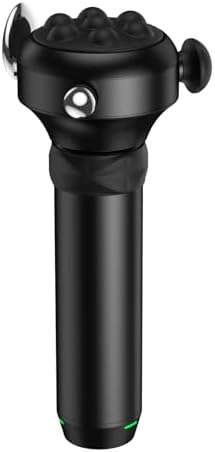
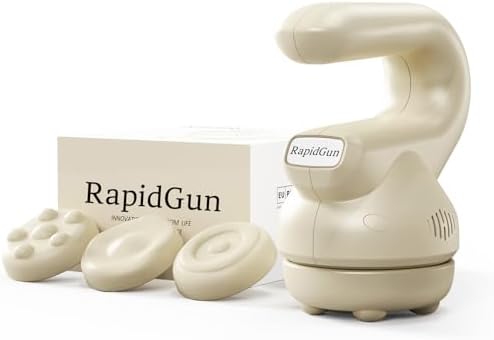
As for the massage guns in the product list, they're not dash cams, and I'm not going to pretend they are. If you want one for the long drives, the Pro Max Vibration Therapy Massage Gun at $149.99 is the one I keep in the garage for after a 12-hour shift, and the Prime Handheld Mini Orbital Therapy Massager at $92.99 is a decent travel option. But they don't record footage, and they won't help you in an insurance dispute. Stick to the camera.
Update, March 2026: I'm still running the VIOFO A119 V3 in my daily driver, and it's survived two more Phoenix summers without a hiccup. I'm currently testing the VIOFO's newer dual-channel models and a batch of hardwire kits for parking mode battery drain, so expect a follow-up in a few months.